FORM AND MEANING
I understand jewellery as a design object in which form, material, function and meaning come together. I am inspired by geometry, nature and ancient mysticism, exploring within their structures order, balance and harmony, as well as the tension between symmetry and asymmetry, clarity and intuition. I do not follow trends, but develop timeless forms with their own distinctive expression. Material plays a particularly important role in this process, as precious metal, with its radiance, structure, weight and response to light, actively shapes the character of each piece. Precious metal is therefore not merely a material, but an integral part of the story, symbolism and final design expression.
THE POWER & SHINE OF PRECIOUS METALS
The beauty of nature continually inspires me. I see precious metals as valuable natural resources, which is why I use them in my work with responsibility, respect, and an awareness of their value. I believe that every piece of jewellery carries the imprint of its material, its journey
through time, and the creative process behind it.
SILVER AS A MATERIAL
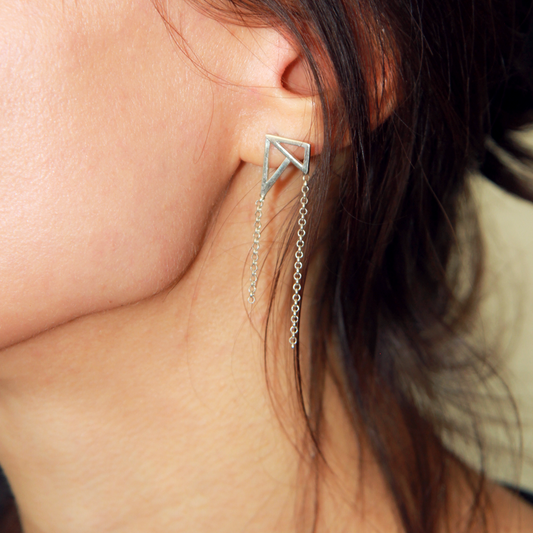
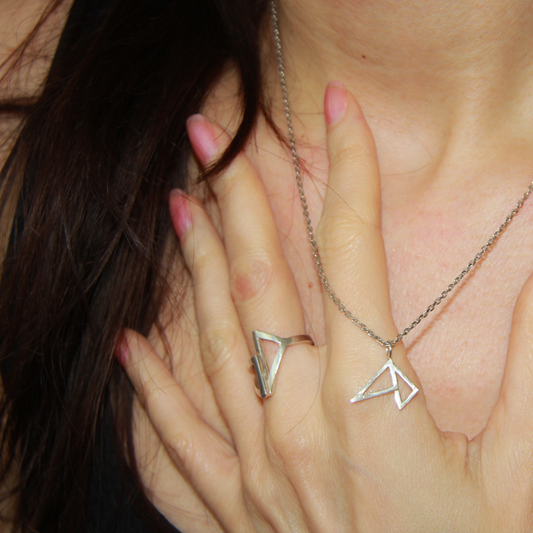
Silver embodies a delicate, cool-toned reflection of light and is closely associated with the energy of the moon. Its luminous elegance conveys a sense of glamour and refinement, while strongly reflecting feminine energy and its inherent allure. As a material, silver is often perceived as soothing, calming, and purifying. Its radiant surface evokes a sense of mystery and serves as a symbol of peace and serenity.
GOLD AS A MATERIAL
The warmth of gold symbolizes wealth, strength, and light, and is closely associated with the energy of the sun. It carries associations with higher ideals, wisdom, and inner peace. While silver is traditionally attributed with soothing, calming, and purifying qualities, gold, through its radiance, illuminates and enhances everything in its presence. As a material, gold is soft and delicate, which means that careless handling can result in scratches and other surface damage. Unlike silver, gold does not tarnish, but contact with skin oils, makeup, lotions, and other substances can diminish its original lustre.
WEAR AND TARNISHING OF SILVERJEWELLERY
The jewellery is made of 925 sterling silver, a precious metal characterised by its distinctive bright lustre and suitable for contact with the skin. Like all precious metals, silver is relatively soft, which means that its surface and form may gradually change over time. Frequent or everyday wear can result in fine scratches, surface wear, minor deformations, and other permanent changes. Repeated bending may cause cracks, while friction can gradually alter the surface. Such changes are a natural part of the jewellery’s lifespan and are also a record of its use, the passage of time, and its relationship with the wearer.
WEAR AS PART OF THE JEWELLERY’S LIFESPAN
Wear describes the changes that jewellery made from precious metals develops as a result of use. Their intensity depends on the manner and frequency of wear, mechanical contact with other objects, as well as storage and maintenance practices. As silver is a relatively soft material, mechanical stress may gradually diminish its original surface lustre or result in fine scratches and other changes. These are not necessarily signs of damage, but may instead be understood as a natural expression of the ageing and use of the jewellery.
THE NATURAL TARNISHING OF SILVER
In addition to mechanical wear, silver gradually changes as a result of environmental influences. Tarnishing is a natural chemical process in which a darker layer gradually forms on the surface of the metal as a result of reactions with substances in the surrounding environment. The process is influenced primarily by humidity, polluted air, heat, water, particularly salt water, as well as contact with products such as perfumes, skin creams, hairsprays, and other substances. The change may initially appear as a loss of the original lustre or as a slightly yellowish tone. Over time, brown and increasingly darker shades may develop, eventually resulting in an almost black surface. As the silver jewellery is not coated with a protective layer of rhodium, such changes are naturally expected over time.
Tarnishing is therefore not a defect in the material or craftsmanship, but a natural characteristic of
silver and part of its ageing process. The intensity of tarnishing may vary depending on the environment, the way the jewellery is worn, and the individual conditions to which it is exposed.
CARE AND PRESERVATION
Silver is a precious metal that, when properly cared for, can retain its characteristic lustre and beauty for many years. As it is naturally sensitive to mechanical and environmental influences, proper care can significantly slow surface wear and the formation of tarnish, helping to
preserve the jewellery’s original appearance for longer.
CLEANING
Gently clean the jewellery with a soft cloth made of 100% cotton and free of coarse fibres. If necessary, clean it with lukewarm water and mild soap, then dry it thoroughly with a soft cloth. For more intensive cleaning, we recommend using a specialised silver polishing cloth.
Avoid paper towels, polyester, and other rough or abrasive fabrics, as they may cause fine scratches and damage the surface of the silver. When cleaning the jewellery, avoid rubbing it too vigorously, as this may accelerate surface wear.
WEARING AND PROTECTION
The jewellery should be the last piece you put on and the first one you take off. Put it on only after applying perfume, creams, makeup, hairspray, and other skincare or haircare products. This helps minimise direct contact between the silver and substances that may accelerate tarnishing or damage its surface. Always remove the jewellery before sleeping, showering, washing your hands, bathing, swimming, or exercising. In particular, avoid contact with salt water, thermal water, cleaning products, chemicals, and other aggressive substances. Protect the jewellery from prolonged exposure to heat and direct sunlight.
STORAGE
When not being worn, store the jewellery in a clean, dry environment, preferably in a soft, dust-protective pouch and its original packaging. Individual pieces should ideally be stored separately, as contact and friction between them may cause scratches or other surface damage. Keep the jewellery away from sharp or abrasive objects, other pieces of jewellery, moisture, adhesives, chemicals, and hot surfaces. Due to its increased humidity, the bathroom is not a suitable place for
long-term storage of silver jewellery.
PRESERVING THE MATERIAL AND ITS STORY
With proper and regular care, the intensity of surface wear and tarnishing can be reduced, although neither can be completely prevented. Changes that occur over time are a natural part of the properties of silver and its lifespan. Silver jewellery gradually changes through use, and
its surface records the passage of time, the way it is worn, and the environment in which it has been worn. A scratch, a change in lustre, or a shift in surface tone are therefore not necessarily merely signs of wear, but may become part of the jewellery’s individuality and story. To preserve the appearance of the jewellery for as long as possible, we recommend avoiding contact with thermal and salt water and protecting it from heat, hot surfaces, adhesives, chemicals, and other
aggressive substances. When not being worn, store it in a dry and safe place, preferably separately from other pieces of jewellery, to prevent unnecessary friction and surface damage.
Jewellery care is therefore not only about preserving its original appearance, but also about respecting the material from which it is made. With proper care, its form, character, and beauty can be preserved for as long as possible, while the traces of time become part of its unique story.
JEWELLERY WITH GEMSTONES
Gemstones are hard materials, but they can still be damaged through careless handling or improper care. Jewellery featuring stones such as onyx, ruby, diamond, pearl, and others may be particularly sensitive and should therefore be handled with care.
To clean jewellery with gemstones, simply use a dry, lint-free cloth made of 100% cotton and avoid strong cleaning agents. If necessary, you may use lukewarm water with a mild soap solution. Organic gemstones, such as pearls, should only be cleaned with a soft, slightly damp cloth.
Avoid using paper towels, as the fibres in these materials can cause fine scratches and compromise the surface of the jewellery. Jewellery containing gemstones should be stored separately from other pieces, preferably in a protective box or pouch.
Almost every gemstone is significantly harder than the metal in which it is set. As a result, gemstones can easily scratch the metal surface and may also damage other pieces of jewellery if they come into contact with one another. For this reason, individual pieces should be stored separately to prevent unnecessary friction and surface damage.
AVAILABILITY OF JEWELLERY
I try to keep a lot of products in constant stock. However, if a particular shape or size is out of stock when you order, you will be notified immediately. In this case, please be advised that the production time for the jewellery ordered is between 5 and 10 working days.
In any case, myself and our experienced jewellery makers will do our best to ensure that your chosen piece of jewellery is with you as soon as possible.
-
AVA No.2 earrings
regular price €160,00regular priceReduced price €160,00 -
AVA No.2 necklace
regular price €170,00regular priceReduced price €170,00 -
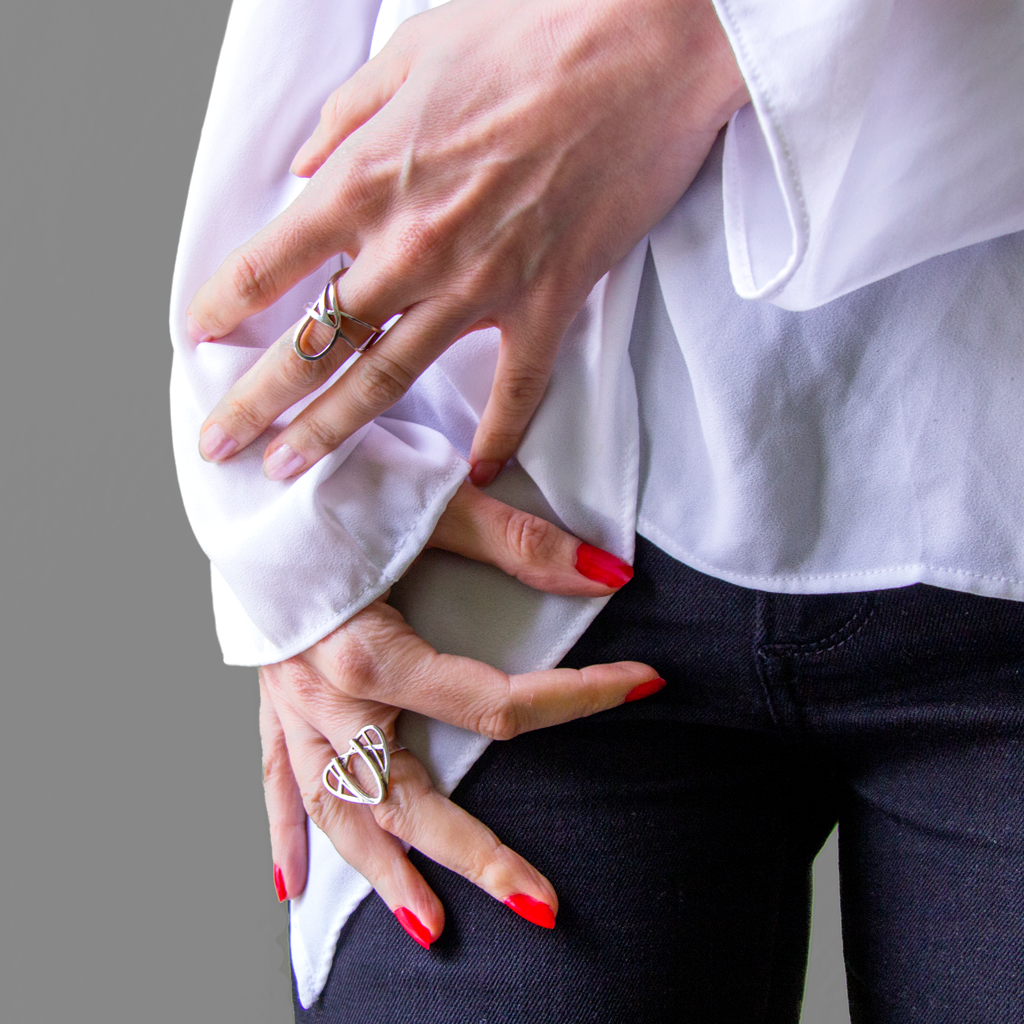
AVA No.2 ring
regular price €150,00regular priceReduced price €150,00 -
AVA No.1 ring
regular price €150,00regular priceReduced price €150,00